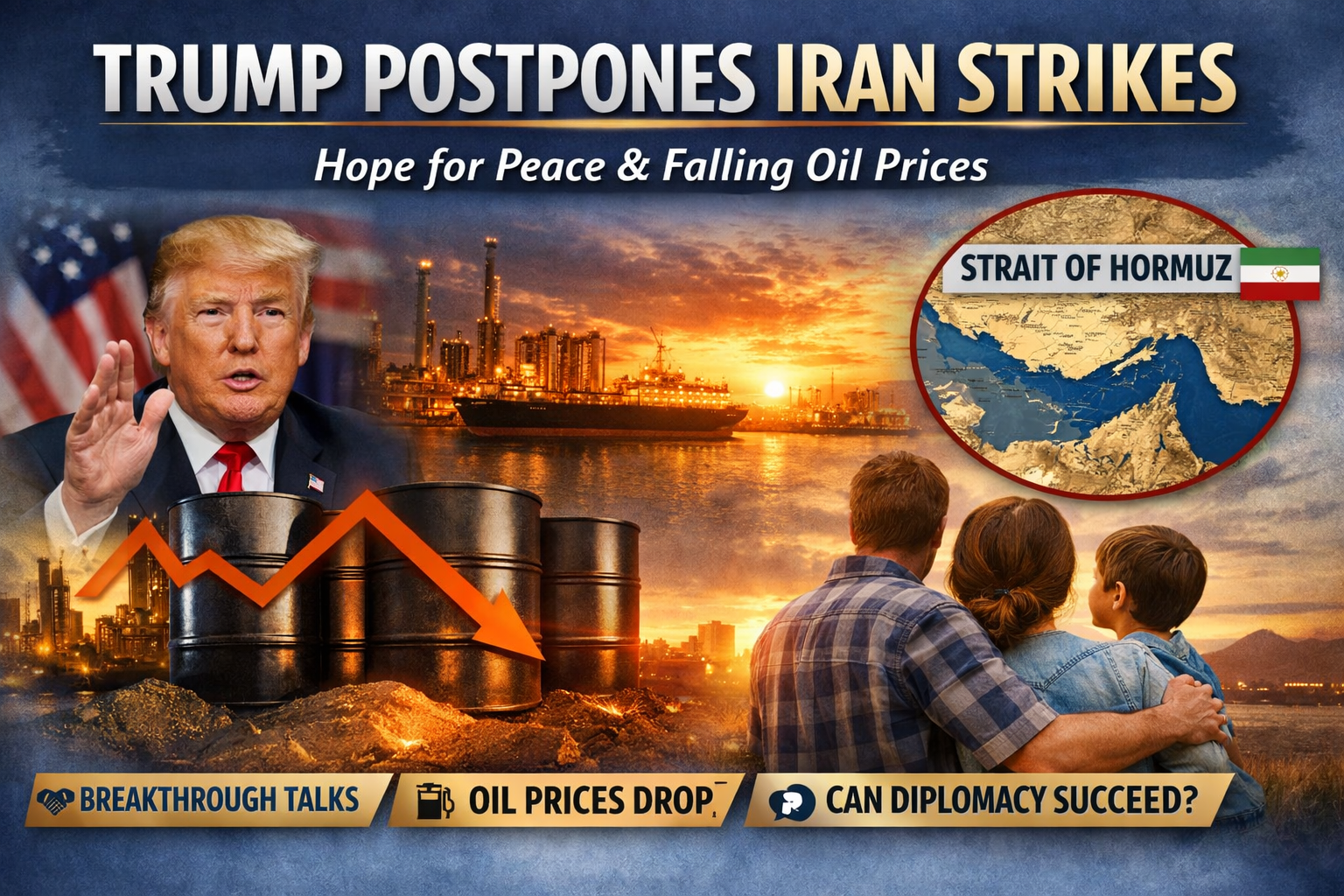
Trump Postpones Strikes on Iran After Breakthrough Talks
Donald Trump announced that the United States has postponed planned military strikes on Iranian power plants following what he described as “productive” talks with Tehran. The discussions, according to Trump, were centered on achieving a “complete and total resolution of hostilities” in the Middle East — a phrase that signals the possibility of a major diplomatic breakthrough in one of the world’s most volatile regions.
Rising Tensions Before the Talks
The announcement comes after weeks of escalating rhetoric between Washington and Tehran. Trump had previously threatened to target Iranian power infrastructure, including facilities tied to oil and gas production, in response to what U.S. officials described as hostile actions by Iran. Such strikes would have risked crippling Iran’s economy and potentially igniting a wider regional conflict.
The U.S.–Iran relationship has been fraught for decades. Since the 1979 Iranian Revolution, relations have been defined by mistrust, sanctions, and occasional confrontations. The nuclear issue has been a central point of contention, with Washington accusing Tehran of pursuing weapons capability while Iran insists its program is peaceful. Military action against Iranian power plants would have marked one of the most severe escalations in recent years.
The Talks and Their Immediate Impact
Trump’s statement that talks were “productive” suggests that both sides may be exploring a diplomatic off-ramp. While details remain scarce, the emphasis on a “complete and total resolution” indicates that the discussions may go beyond temporary ceasefires and aim for a broader settlement.
Markets reacted instantly. Oil and gas prices, which had surged amid fears of war, dropped sharply after the announcement. Analysts noted that even the perception of reduced risk in the Gulf region — home to some of the world’s most critical shipping lanes and energy reserves — can have a dramatic effect on global energy markets.
Historical Context: U.S.–Iran Negotiations
This is not the first time Washington and Tehran have engaged in dialogue. The 2015 Joint Comprehensive Plan of Action (JCPOA), commonly known as the Iran nuclear deal, was a landmark agreement that temporarily eased tensions by limiting Iran’s nuclear activities in exchange for sanctions relief. However, Trump withdrew the U.S. from the deal in 2018, arguing that it was flawed and failed to address Iran’s regional activities.
Since then, relations have deteriorated, with both sides engaging in military posturing and economic pressure. The current talks, therefore, represent a significant shift, suggesting that both parties may be willing to revisit diplomacy despite years of hostility.
Global Reactions and Strategic Implications
The announcement has drawn cautious optimism from international observers. European allies, who have long advocated for dialogue with Iran, are likely to welcome the move. Regional powers such as Saudi Arabia and Israel, however, may remain skeptical, given their concerns about Iran’s influence across the Middle East.
Strategically, postponing strikes buys time for diplomacy but also signals to Iran that Washington is willing to negotiate rather than escalate. For Trump, the decision may also carry domestic implications, as avoiding war while securing a diplomatic breakthrough could be framed as a major foreign policy achievement.
Energy Markets and Economic Ripples
The immediate drop in oil and gas prices highlights how sensitive global markets are to developments in the Gulf. Traders had been bracing for supply disruptions, and the announcement of postponed strikes eased those fears. Lower energy prices could provide short-term relief to consumers worldwide, though analysts caution that volatility will remain as long as tensions persist.
What Comes Next
While the postponement of strikes is a relief to many, experts caution that the situation remains fragile. Diplomatic progress in the Middle East has historically been difficult to sustain, and mistrust between Washington and Tehran runs deep. Still, Trump’s decision to hold back military action signals a willingness to prioritize diplomacy over confrontation, at least for now.
Observers will be watching closely to see whether these talks lead to concrete agreements or simply mark a temporary pause in hostilities. For the moment, however, the announcement has eased fears of imminent conflict and offered a glimpse of what de-escalation could look like in a region long defined by instability.
💬 Engage With This Story
- Poll: Do you think diplomacy will succeed in ending U.S.–Iran hostilities?
- Yes, talks can lead to peace
- No, tensions will flare again
- Too early to tell
- If oil prices continue to fall due to de-escalation, how might this affect everyday life in your country?
- Did you know the Strait of Hormuz — a narrow waterway near Iran — is one of the most important oil transit routes in the world, with about 20% of global petroleum passing through it daily?
Author
S.FAISAL DURRANI

The What Happened Newsroom is the editorial team behind WhatHappened.online, publishing verified global news and analysis across politics, technology, and current events. Our goal is to keep readers informed with factual, balanced, and timely reporting.
🔍 Read our Editorial Policy to learn how we verify information and correct errors.